New textbook on human rights
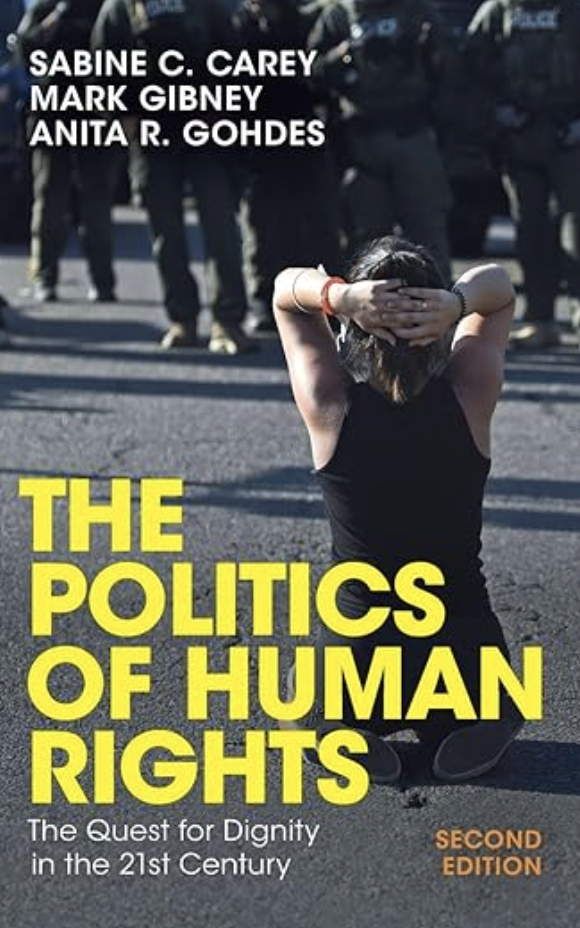
/Fifteen years after the first edition came out, we finally have a completely updated and overhauled version of our textbook ready for you! We hope you will find it just as useful, or possibly even more so, than the first edition! Check out The Politics of Human Rights. The Quest for Dignity in the 21st Century.
Reviews and Endorsements
“The Politics of Human Rights offers an insightful and empirically grounded exploration of human rights, their violations, and the mechanisms designed to protect them. This revised edition integrates rigorous scientific analysis with real-world case studies, making it an invaluable resource for students, scholars, and practitioners. With its focus on the universal nature of human rights and the shared responsibility to uphold them, this book is an essential guide for understanding both the challenges and the progress in the fight for human dignity.” Bonny Ibhawoh - Senator William McMaster Chair in Global Human Rights, McMaster University
“This is an excellent introduction to the politics of human rights and what we know from existing research. It provides a framework to help readers understand how challenges to human rights arise, highlighting the specific actors and their choices, as well the scope for efforts to improve human rights.” Kristian Skrede Gleditsch - Regius Professor of Political Science, University of Essex & Research Associate, Peace Research Institute Oslo
“This book is a must-read primer on human rights, perfect for undergraduate courses, graduate seminars, as a comprehensive guide for scholars moving into studying human rights, and as a reference tool for scholars already studying human rights or repression. It expansively covers essential topics – the legal definitions of human rights, data collection on human rights violations, the causes of human rights violations, and the prevention of, and societal recovery from, human rights violations – but does so accessibly and with a myriad of engaging examples. The book also smartly engages a variety of critical contemporary issues, including the human rights of migrants, corporations and organized crime as human rights violators, police violence in the US in a human rights context, and many others. The chapter on human rights and the Internet is an incredible and compelling synthesis of a diverse set of sub-fields.” Jennifer Earl - Chair and Professor, Department of Sociology and Criminal Justice, University of Delaware